
Planning for 2027: how to keep the day from becoming a parade of presentations
In November, almost every leadership team has the same day in the calendar: planning the next year. Each director comes with the department's presentation, with the figures and with the list of initiatives. By evening everyone has seen everything, and the strategy for next year is the sum of eight presentations.
The same day can be built differently, without taking longer. The difference lies in three places: what is done beforehand, what is decided in the room and what is checked in January.
Why planning turns into a parade
The usual format has its own logic: each department presents its plan, the others listen, at the end everything is added up. Except that a string of presentations is built for information, and planning requires choices. Choices are made between priorities that compete for the same people and the same money, and presentations, one after another, never put them face to face.
The symptoms are easy to recognise:
- Each plan, taken separately, is reasonable. Added together, they ask for twice as many people as the company has.
- The discussion is consumed by clarification questions about slides, and the time for disagreement never appears.
- The list at the end has fourteen priorities, all "critical".
Beforehand: read at home, not presented in the room
The biggest time saving happens before the day. Each department sends its plan in writing, at most two pages, a week ahead and in the same format: what we want to achieve, what resources we need, what assumptions we rely on and what we stop doing to make room for the new plan.
The last heading changes the whole day. A plan that gives up nothing says nothing about priorities.
In the room: four blocks instead of eight presentations
45 minutes1. What happened this year
Before any plan, a shared look back: what we set out to do a year ago, what happened, what surprised us. No hunt for culprits. If you skip this block, everyone arrives with their own version of the year that passed, and the new plan rests on eight different versions.
2. What we assume about the coming year
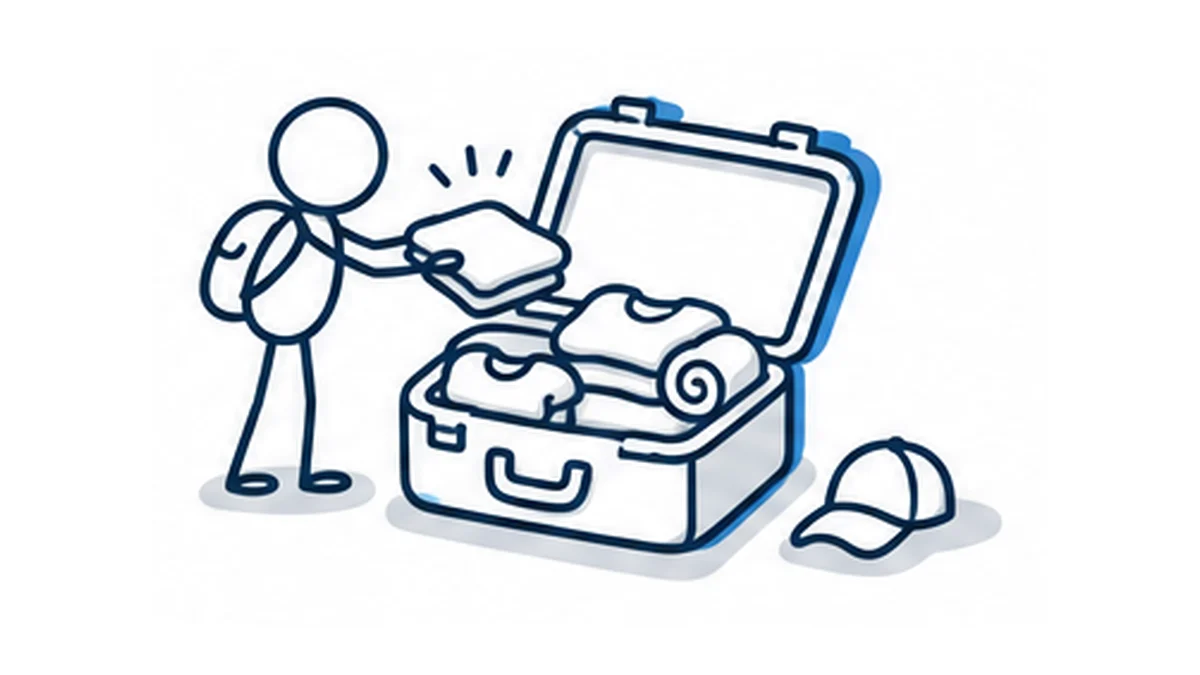
Every plan rests on a few assumptions: the market grows, the big client stays, recruitment works. Brought into view and put on a wall, you immediately see the ones that one department makes and another contradicts. This is usually where the most useful conversation of the day happens. For teams who feel next year won't resemble the last, the block can become a short scenario exercise.
90 minutes3. What we choose
This is where priorities are decided, and two rules help a lot. The first: you establish beforehand who decides and how, for each type of decision. I wrote about this at length in Who actually decides? The second: the number of priorities is fixed before the discussion. Three, five at most. With a limit, the question shifts from "is it important?", where the answer is always yes, to "is it more important than this?".
With larger groups, an anonymous prioritisation round before the discussion prevents the situation in which the first opinion in the room is that of the most important person. Method 35 does this in half an hour.
30 minutes4. What we stop doing
The block skipped most often. For each new priority, what is stopped, what is postponed or what is made smaller. Written down, with the name of the person who announces it to the teams.
If the choice cost nothing, you chose nothing.
The CEO's role on this day
It is the hardest role in the room. If they say first what they think, the rest of the day becomes a discussion about what they said. If they say nothing, the team guesses. The version that works: they state their criteria at the start (what matters to them next year, what is negotiable and what isn't), and give their opinion on the options at the end, after the others have spoken. I explained why the leader speaks last in the article on the leadership meeting that decides nothing.
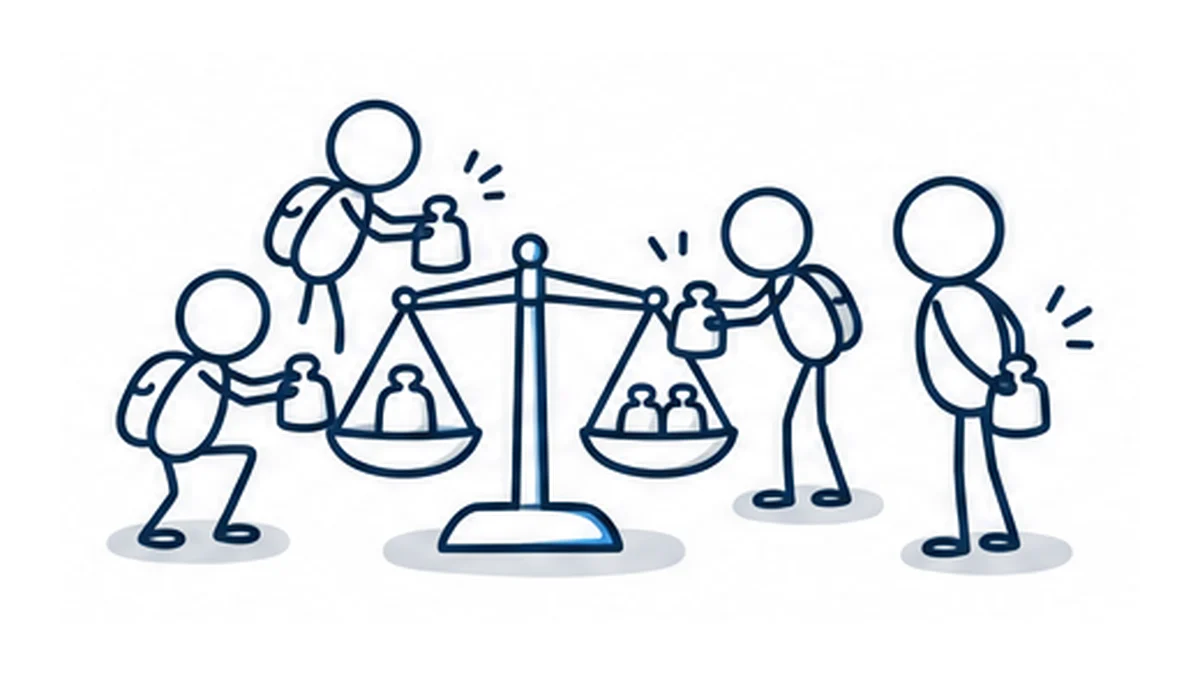
This is also where you can see why many teams bring in an external facilitator for planning. The CEO can't be, on the same day, both the person who decides and the person who runs the process.
In January: the one-hour review
Planning gets lost the same way a training does: after two weeks, in the day-to-day. Before you leave the room, put a one-hour meeting in the calendar for the second half of January, with a single question for each priority: what has moved and what stopped it. If nothing has moved on a priority, you have learned something important. Either it wasn't really a priority, or a person or a decision is missing.
The agenda, in brief
| Moment | Duration | What comes out |
|---|---|---|
| Beforehand | a week ahead | two-page plans, with the "what we stop doing" heading |
| The year that passed | 45 min | a shared version of what happened |
| Assumptions | 60 min | assumptions in view, contradictions named |
| Choices | 90 min | three to five priorities and who decides what |
| What we stop doing | 30 min | the list of stops and postponements, each with an owner |
| The review | 60 min, in January | what moved, what got stuck, what we change |
With an opening and breaks, it fits into a single day. For teams who also want the scenarios part or who work with several levels of management, the process stretches over several sessions, and that is settled at diagnosis.
Planning the year with the leadership team?
We build the planning day around your team's real blockage: assumptions that contradict each other, priorities that don't get chosen or decisions that come undone in the corridor. The first conversation is a free 30-minute diagnosis.
See strategic alignment