
Strategy doesn't end in the room: two days of planning and three retrospectives
A strategic plan is written on a good day, then starts going stale. The market moves, an important client leaves, an assumption the whole plan rested on no longer holds. If nobody goes back to the plan, the team executes the map of a terrain that has changed.
The programme we propose to leadership teams keeps the strategy open all year: two days of strategic planning, followed by three retrospective and reconnection workshops, three months apart.
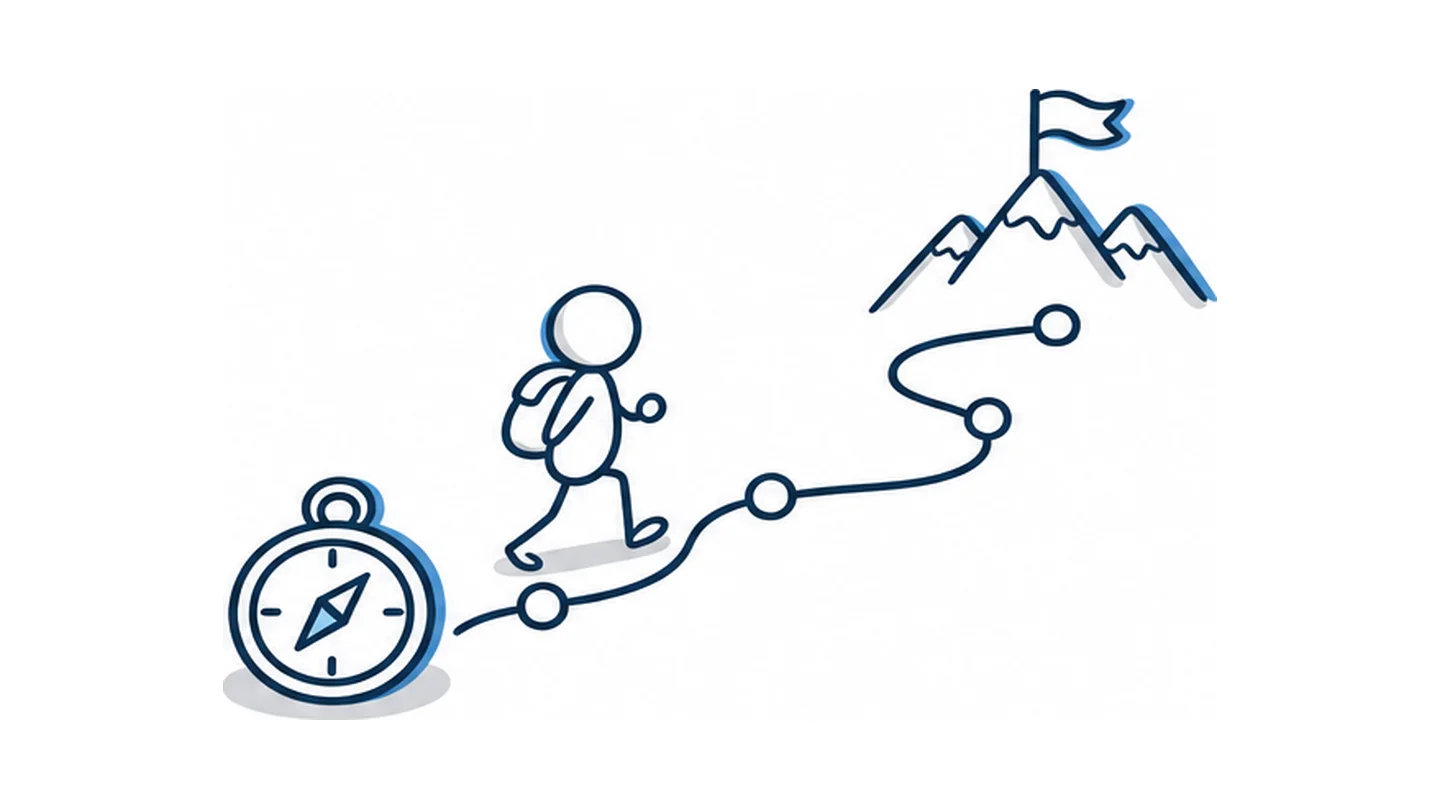
What happens to a plan after the good day
After planning, operations take over everything. In the first weeks the priorities are clear. Then the urgencies arrive, and after three months few people know for sure what the three priorities were and which assumptions they rested on.
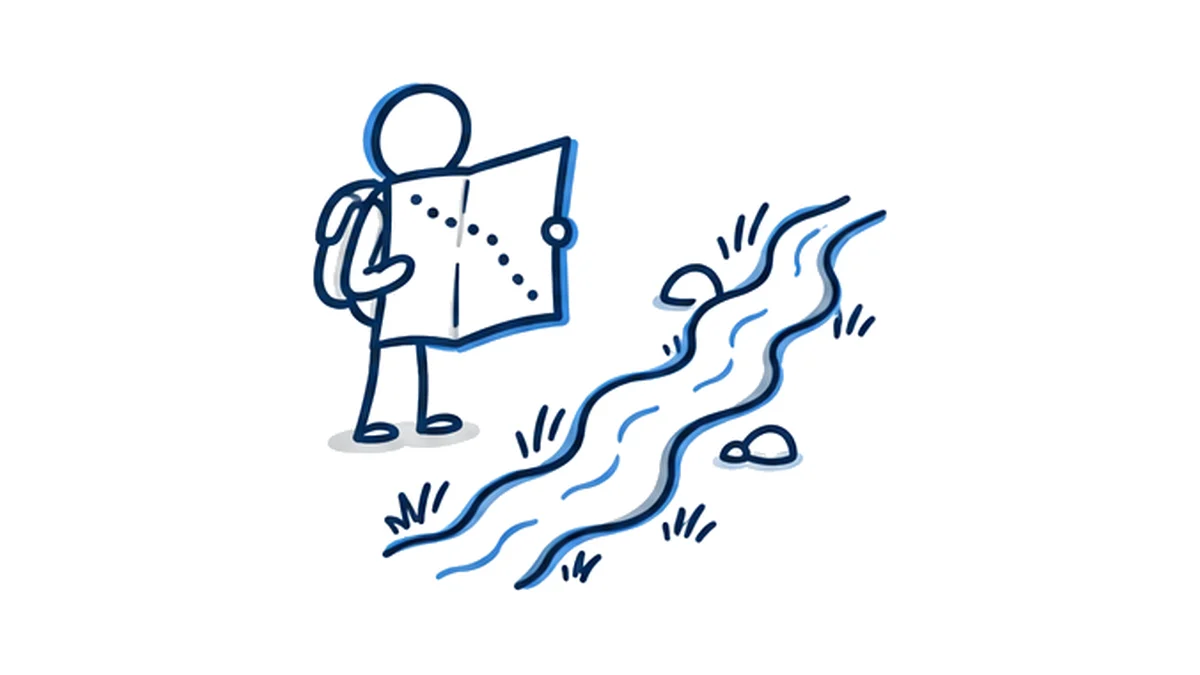
Meanwhile, things change. A strategy with no scheduled moment at which it is reconsidered doesn't adapt: it is executed until it becomes visible, late, that it no longer works. Agility requires questions asked at intervals set in advance, not only when something has gone badly.
Without time reserved for follow-up and adjustment, the risk of not getting where you meant to go grows. And that time doesn't appear in the calendar by itself. Someone has to put it there, before the team leaves the room.
The programme: two days, then three meetings three months apart
| Moment | What we do | What comes out |
|---|---|---|
| Days 1 and 2 | Strategic planning | chosen priorities, assumptions written down, what we stop doing, owners |
| At 3 months | Retrospective and reconnection | what moved, which assumptions changed, the adjusted plan |
| At 6 months | Retrospective and reconnection | the same cycle, on a plan already adjusted once |
| At 9 months | Retrospective and reconnection | the adjusted plan and the lessons of the year, prepared for the next planning |
The two days at the start begin from the same four blocks described in the article on planning the year: the year that passed, the assumptions, the choices and what we stop doing. With two days instead of one, there is also room for the scenarios part (Strategic Foresight) and for turning priorities into commitments with owners and progress criteria.
What happens at a quarterly retrospective
Those who take part discuss, they don't present. Reports are read beforehand, and the time in the room is spent on four questions:
- What happened from the plan? On each priority: what moved and what stopped it.
- Which assumptions changed? The assumptions written in the first two days are taken and marked one by one: confirmed, disproved or still unclear.
- What do we decide differently? The plan is changed explicitly: what comes in, what goes out, what is postponed, who is responsible for each.
- Are we still aligned? The reconnection: we check that "success" still means the same thing to everyone, before the differences come out in the corridor.
Why every three months
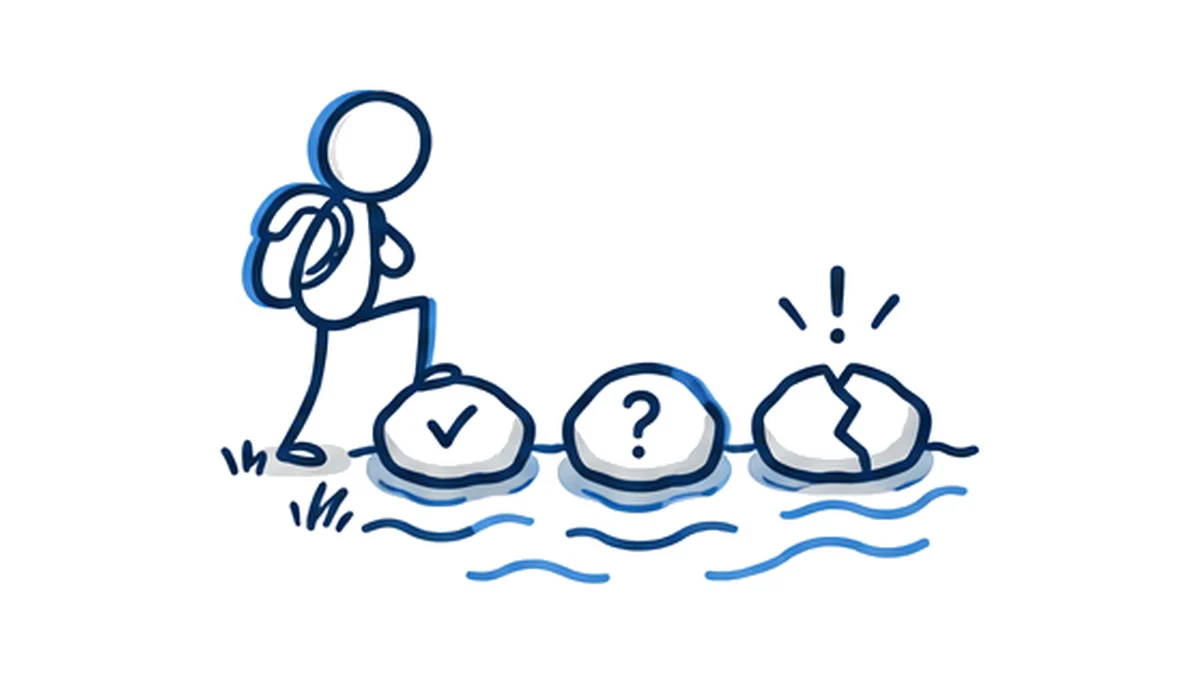
Three months is long enough for the effects of the first decisions to show and short enough that a deviation doesn't become a lost year. The rhythm can be adapted: some teams prefer four months, others two. What matters is that the dates are in the calendar before you leave the room.
When it isn't worth it
- When the strategy is decided by one person and the others execute. The retrospectives become meetings of justification.
- When the organisation isn't willing to change the plan in the middle of the year. The retrospective remains an exercise without consequences.
- When the real problem is misalignment (objections appear in the corridor, each department pulls in a different direction). Start with strategic alignment, then comes the programme.
What it looks like with an external facilitator
The same facilitator holds all four moments, so at each retrospective they have the history in front of them: what was written, what was assumed, what was decided. The leader takes part as a member of the team and gives their opinion last, as at planning. If the change that year is a reorganisation or an integration, see also the page on facilitation for organisational change.
Frequently asked questions
How long does the strategic planning programme with retrospectives take?
Strategic planning takes two days, followed by three retrospective workshops, three months apart: at 3, 6 and 9 months. We set the duration of each retrospective at diagnosis, depending on the number of priorities and participants.
Why retrospectives every three months and not just a short review in January?
A short review checks whether the plan has started. A quarterly retrospective has time to change the plan: assumptions are confronted with what happened, and priorities are explicitly modified, with an owner for each. The two can be combined.
Who should take part in the retrospectives?
The same group that did the planning, so that changes to the plan are decided by those who execute them, plus the sponsor with decision authority. If someone is missing or the composition changes, the newcomers receive the plan and the assumptions beforehand.
Want a year of strategy kept open?
We build the programme around your team's situation: the rhythm of the retrospectives, who takes part, what is measured. The first conversation is a free 30-minute diagnosis.
See strategic alignment